
Does the thought of a garden that loses the sun by lunchtime make you want to walk away from a house you love? You aren’t alone in that hesitation. When you’re browsing listings, the question “should you buy a house with an east facing garden” often leads to a rabbit hole of conflicting forum advice. You want a home that feels bright and welcoming. You don’t want a cold patch of grass that feels useless by the time you finish work.
We understand the pressure of making the right call. With 2024 data showing that south-facing gardens command a 4% price premium, the anxiety over garden orientation is real. This guide cuts through the noise to reveal the reality of east-facing plots. You’ll discover how the sun path actually works, the surprising benefits for families, and practical ways to mitigate shade. We’ll show you how to turn a specific garden orientation into a strategic lifestyle choice so you can move forward with total confidence.
Key Takeaways
- Master the science of the sun path to ensure your garden works for your specific daily routine.
- Get the clarity you need to answer the ultimate question: should you buy a house with an east facing garden?
- Navigate the “South-Facing Premium” myth and understand how energy efficiency is shifting buyer priorities in 2026.
- Use strategic landscaping and reflective materials to capture evening sun and eliminate dark, cold corners.
- Implement expert viewing tactics, like the “golden hour” rule, to boost marketability and secure a faster sale later.
Understanding the East-Facing Garden: The Science of Sun and Shade
An east-facing garden is defined by the sunrise. If you stand at your back door and look straight out at the horizon where the sun begins its day, you’re looking east. This orientation is a deal-breaker for some, but it shouldn’t be. When asking yourself “should you buy a house with an east facing garden“, you need to look beyond the basic compass point. It is about the specific geometry of your plot and how you intend to use the space during the day.
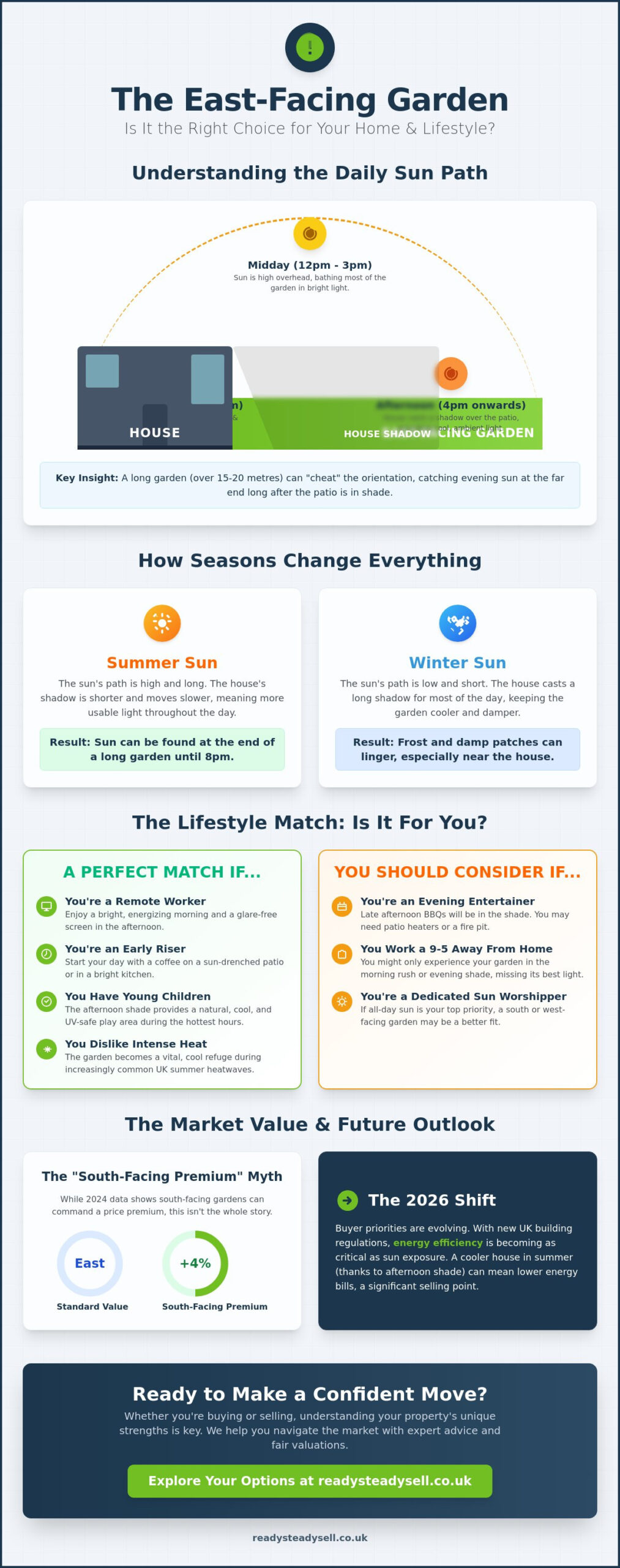
The sun path is predictable. You get intense, direct light in the morning as the sun climbs. By midday, the sun is high overhead, bathing most of the space in light. As the afternoon progresses, the sun moves behind the house, casting a shadow over the patio and the rear windows. This “shadow cast” is the primary concern for most buyers. The height of your house and the pitch of your roof determine the depth of this shadow. A bungalow with an east-facing garden feels much brighter than a three-storey townhouse with the same orientation. If you are worried about how this orientation impacts your property’s marketability, you can see how our process works to understand how we value different garden types.
Long gardens are the ultimate workaround. If your plot extends beyond 15 or 20 metres, the rear of the garden will likely escape the house’s shadow entirely. This allows you to “cheat” the east-facing rule by catching the evening sun at the far end of the lawn while your patio remains cool. Understanding these principles of garden design allows you to zone the space effectively and maximize the light you do have.
The Daily Light Cycle in a 2026 UK Home
Sunrise to 11am is the golden era for these gardens. Your kitchen and patio will be flooded with natural light and immediate warmth, making it perfect for breakfast outside. From 12pm to 3pm, the sun is at its highest point. Depending on your roof pitch, light may still hit the areas closest to the house. From 4pm onwards, the house acts as a giant parasol. The garden moves into ambient light, providing a cool, shaded environment that many find relief in during increasingly hot UK summers.
Seasonal Variations: Summer vs. Winter Light
The height of the sun in the sky dictates your experience. In summer, the sun stays high for longer. This means the shadow cast by your house is shorter and moves slower. You might find sun at the end of the garden until 8pm. Winter is a different story. The low sun stays behind the house for most of the day. This can lead to damp patches or frost that lingers until midday. Solar orientation defines the directional placement of a building on its lot to optimize sunlight exposure, which is now a critical component of UK building regulations regarding energy efficiency.
The Lifestyle Debate: Is an East-Facing Garden Right for You?
Your schedule dictates the value of an east-facing garden. For many, the choice isn’t about the sun itself. It’s about when they are actually home to see it. Deciding whether you should you buy a house with an east facing garden depends almost entirely on your personal clock. If you work a traditional 9-5 away from home, you might only see your garden in the morning rush or the evening shade. This can feel like a loss. However, for the growing population of remote workers, the morning light is a productivity powerhouse.
UK summer heatwaves are becoming more frequent and intense. During record-breaking temperatures, an east-facing garden becomes a vital refuge. While south-facing homeowners are retreating indoors to hide from the 3pm glare, you can actually sit outside in the shade. It’s a built-in climate control system for your outdoor life. If you’re still undecided on the property’s potential, compare your selling options to see how different buyers view garden orientation.
The “BBQ Problem” is the most cited downside. If you love hosting late-night summer dinners, you’ll be doing it in the shadows. You might need to invest in patio heaters or fire pits to keep the temperature up once the sun moves behind the roofline. But for families with young children, this evening shade is a blessing. It provides natural protection from peak UV rays during the hottest parts of the day, allowing kids to play safely without the risk of overheating.
The “Morning Person” Advantage
Early risers win here. There’s a significant psychological benefit to eating breakfast in a sun-drenched kitchen. For plant enthusiasts, this light is ideal for species like Camellias or Hydrangeas that crave morning warmth but wilt in the harsh afternoon heat. Home offices with east-facing views also benefit from a glare-free afternoon, making it easier to work on screens without closing the curtains and sitting in the dark.
The Evening Shade Challenge
Socialising after 5pm requires a different strategy in an east-facing space. The lack of direct evening sun can lead to a “dampness” risk if the garden has poor drainage. Moss and algae can build up on patios that don’t get enough afternoon heat to dry out properly. Regular maintenance and high-quality hardscaping are essential to keep the space feeling fresh. You’ll need to be proactive with a pressure washer to ensure the shaded areas don’t become slippery or unsightly over time.
Resale Value and Marketability: Will It Be Harder to Sell?
Resale value is often the biggest source of anxiety for buyers. You don’t want to invest in a property that becomes a liability when you’re ready to move on. The “South-Facing Premium” is a documented reality, but it isn’t the only factor that determines your home’s worth. When weighing up should you buy a house with an east facing garden, you must look at the hard data. A 2024 analysis by Rightmove found that south-facing gardens carry an average price premium of 4%, which equates to roughly £16,226. This is a significant figure, but it doesn’t mean an east-facing property is a “bad” investment. It simply means the market prices it differently.
Marketability is also about speed. Rightmove data shows that south-facing homes find a buyer in 62 days on average, compared to 71 days for those without. A nine-day difference is manageable for most sellers. In 2026, buyer psychology is shifting. Modern buyers are increasingly focused on energy efficiency and insulation. A house that stays naturally cooler during intense summer heatwaves is becoming a major selling point. The “cool refuge” of an east-facing garden in the afternoon can be a powerful differentiator against homes that become unbearable glass boxes in the midday sun.
Garden orientation is rarely the primary driver of a sale. It sits behind location, school catchments, and internal floor plans. If the house itself is perfect, most buyers will overlook the garden aspect. They see a lifestyle they can adapt to, rather than a structural flaw they can’t change. Focus on the total package rather than getting stuck on a single compass point.
The Impact on Property Valuations
Professional surveyors look at the big picture. While orientation is noted, it rarely causes a down-valuation on its own. Agents will look at comparable local sales to set your asking price. A stunning interior or a high-spec kitchen extension will always carry more weight than the direction the grass faces. If you are concerned about your future equity, you should research how much is my house worth to see how professional valuations are calculated in the current market. A well-maintained home will always find its audience.
Buyer Objections and How to Overcome Them
North-facing gardens are the only ones that truly struggle on the open market due to the total lack of direct light. East-facing plots are seen as a “lifestyle choice” rather than a compromise. To secure a fast sale later, use professional photography to capture the “golden hour” between 8am and 10am. This proves the garden is bright and usable. Highlight the morning sun in your listing description to attract those who value a bright start to their day. You aren’t losing a buyer; you’re simply targeting a specific type of sun-seeker.
Maximising Light: Design and Landscaping “Fixes” for East-Facing Gardens
Light is a resource you can manage. If you are still asking yourself “should you buy a house with an east facing garden“, remember that you aren’t a passive observer of the sun path. You can manipulate how light enters your home and how it behaves in your outdoor space. Smart design turns a shaded afternoon into a bright, ambient retreat. You don’t need a south-facing plot to enjoy a luminous garden. You just need a strategic plan to capture what’s available.
Start with your hardscaping. Dark slate or traditional red brick absorbs light, making shaded areas feel colder and smaller. Replace them with light-coloured materials like silver granite, cream porcelain, or natural limestone. These surfaces act as giant reflectors. They bounce ambient light back toward the house long after the direct sun has moved behind the roofline. Strategic use of outdoor mirrors on north-facing fences can also double the perceived light in darker corners. If these fixes feel like too much work for a property you’re looking to exit, Ready Steady Sell can help you sell your property fast without the need for expensive renovations.
Architectural tweaks are equally powerful. Bi-fold doors and floor-to-ceiling glass are essential for east-facing rear extensions. They remove the barriers that trap morning light in the kitchen. Adding skylights or sun pipes allows you to harvest light from directly above, bypassing the “shadow cast” of the house entirely. These features ensure your living space remains bright even when the garden floor is in shade.
Zoning Your Garden for Sun Path
The “Bottom of the Garden” rule is your most effective tool. While the patio closest to the house will be shaded by 4pm, the far end of the garden often remains in direct sunlight for several more hours. Position your main social area or a “Sunset Deck” in this far corner. This creates a secondary sanctuary for evening drinks. Reserve the area closest to the house for a “Breakfast Patio” to capitalise on the intense morning warmth. This zoning ensures every square metre of the plot serves a purpose based on the time of day.
Choosing the Right Plants for East-Facing Aspects
Plants with white flowers or variegated foliage act as natural lanterns. Species like Hydrangea arborescens ‘Annabelle’ thrive in partial shade and glow in the low light of an afternoon. Hostas and Clematis also enjoy the cooler roots provided by an east-facing aspect. Be careful with “frost pockets” near the house. Delicate morning-sun plants can suffer if they defrost too quickly after a cold night. Incorporate organic matter and grit to improve soil structure, ensuring shaded areas don’t become waterlogged during winter months.
Selling a House with an East-Facing Garden: Strategic Advice
Strategic timing is the difference between a quick sale and a stagnant listing. If you own an east-facing property, you must control the narrative from the first viewing. Your “golden hour” is 10am. At this time, the sun is high enough to flood the rear windows and patio with light, but it hasn’t yet moved behind the roofline. Schedule your most important viewings during this window to showcase the garden at its absolute best. You want buyers to walk into a sun-drenched space that feels vibrant and warm.
Position the afternoon shade as a premium feature. With UK summers becoming increasingly intense, the “cool refuge” of an east-facing garden is a powerful selling point. While south-facing homes struggle with overheating and scorched lawns, your garden offers a temperate environment for afternoon relaxation. Frame the shade as a deliberate choice for comfort and wellness. This shift in perspective can turn a perceived weakness into a unique market advantage that appeals to families and pet owners alike.
Don’t let the “unsellable” myth dictate your price. While some buyers are strictly south-facing seekers, many others prioritize floor plans and location over garden aspect. If you find that garden orientation is becoming a genuine hurdle to a fast sale on the open market, it’s time to change your approach. Traditional buyers often have rigid expectations that don’t always align with the reality of modern property values.
The Fast Sale Alternative
Traditional estate agency models can be slow and bureaucratic. If you need to move quickly and the garden orientation is causing hesitation among retail buyers, consider a more direct route. Investors and professional buyers often prioritize the structural integrity and rental yield of a property over the direction of the sunrise. If you are struggling with market friction, you can sell an unsellable house through our network of trusted partners. This removes the stress of multiple viewings and provides a guaranteed timeline for your exit.
Final Verdict: Should You Buy?
The decision of whether should you buy a house with an east facing garden comes down to your personal routine. Use this checklist to make your final call:
- Are you a morning person who enjoys coffee in the sun?
- Do you work from home and need a glare-free afternoon?
- Is the garden long enough to catch the evening sun at the far end?
- Are you looking for a home that stays naturally cooler in the summer?
If you answered yes to most of these, an east-facing garden isn’t a compromise; it’s a benefit. Always visit the property at both 9am and 4pm to see the light transition for yourself. If you’ve realized your current garden doesn’t fit your life, Get a fast offer for your house today and start your search for the perfect plot.
Secure Your Property Future
An east-facing garden is a specific lifestyle choice, not a structural flaw. You now understand the science of the sun path and the strategic fixes that turn shade into a premium feature. Whether you crave sun-drenched breakfasts or a cool refuge from summer heatwaves, the choice is yours. Orientation is just one variable in a complex market. It shouldn’t be the only thing holding you back from your next move.
Ultimately, the decision of whether should you buy a house with an east facing garden rests on your daily routine. If your current property no longer fits your needs, don’t let market hesitation slow you down. Ready Steady Sell brings over 10 years of property market expertise to your doorstep. We provide stress-free alternatives to the open market through our vetted network of UK cash buyers. You can bypass the uncertainty of traditional listings and secure a guaranteed exit without the usual delays.
Check your property’s fast-sale value today and take the next step with absolute certainty. Your perfect home is within reach.
Frequently Asked Questions
Is an east-facing garden a dealbreaker for most buyers?
No, an east-facing garden is rarely a dealbreaker. Most buyers prioritize location, school catchments, and internal floor plans over the direction the grass faces. While some “sun-seekers” insist on south-facing plots, many appreciate the morning light and cooler afternoons provided by an east-facing aspect. It is a specific lifestyle choice rather than a structural flaw that prevents a property sale.
What time does the sun leave an east-facing garden in the summer?
Direct sunlight typically leaves the area closest to the house between 1pm and 2pm. However, because the sun is higher in the sky during summer months, light may linger on the lawn until late afternoon. The exact timing depends on your house’s height and roof pitch. Use this data to plan your outdoor activities and seating areas effectively to capture the best light.
Which is better: an east-facing or a north-facing garden?
East-facing gardens are objectively better than north-facing ones for light levels. North-facing plots often receive zero direct sunlight for much of the year, leading to cold, damp conditions. An east-facing garden guarantees intense morning light and immediate warmth. This makes it a much more attractive prospect for buyers and gardeners who want a bright start to their day without total shade.
Do east-facing gardens get damp or mossy more easily?
Shaded areas can develop moss if drainage is poor. Because the afternoon sun doesn’t reach the patio to dry it out, moisture can linger. You can solve this by installing high-quality drainage and using light-colored, non-porous paving. Regular maintenance with a pressure washer ensures the space remains clean and safe throughout the winter months. Don’t let a bit of moss deter your purchase decision.
Can I get evening sun in an east-facing garden if it is long enough?
Yes, a long garden can “cheat” the east-facing rule. If your plot extends 15 to 20 metres from the house, the rear section will likely escape the house’s shadow. This allows you to catch the sunset while the patio remains cool. When asking should you buy a house with an east facing garden, always measure the plot length to check for this evening sun potential.
What are the best plants for a garden that only gets morning sun?
Choose plants that thrive in partial shade or “cool” light. Hydrangeas, Hostas, and Bleeding Hearts (Dicentra) are excellent choices because they crave morning moisture but wilt in harsh afternoon heat. White-flowering varieties are particularly effective at brightening shaded corners. These species turn a potentially dark space into a lush, vibrant sanctuary that appeals to future buyers and enhances your daily view.
Does a south-facing garden really add more value than an east-facing one?
Data from 2024 shows that south-facing gardens carry a price premium of approximately 4%. This equates to an average increase of £16,226 across England and Wales. While this value gap exists, it is often offset by other factors like internal renovations or high-spec kitchen extensions. An east-facing garden is a stable investment that simply appeals to a different type of buyer schedule.
How can I make my east-facing living room feel brighter in the afternoon?
Use reflective surfaces and strategic decor to bounce ambient light. Large mirrors placed opposite windows and light-coloured walls help maintain brightness once the direct sun moves. Installing skylights or bi-fold doors also brings light deeper into the floor plan. These changes ensure your home feels airy and welcoming even when the sun is on the other side of the building in the late afternoon.